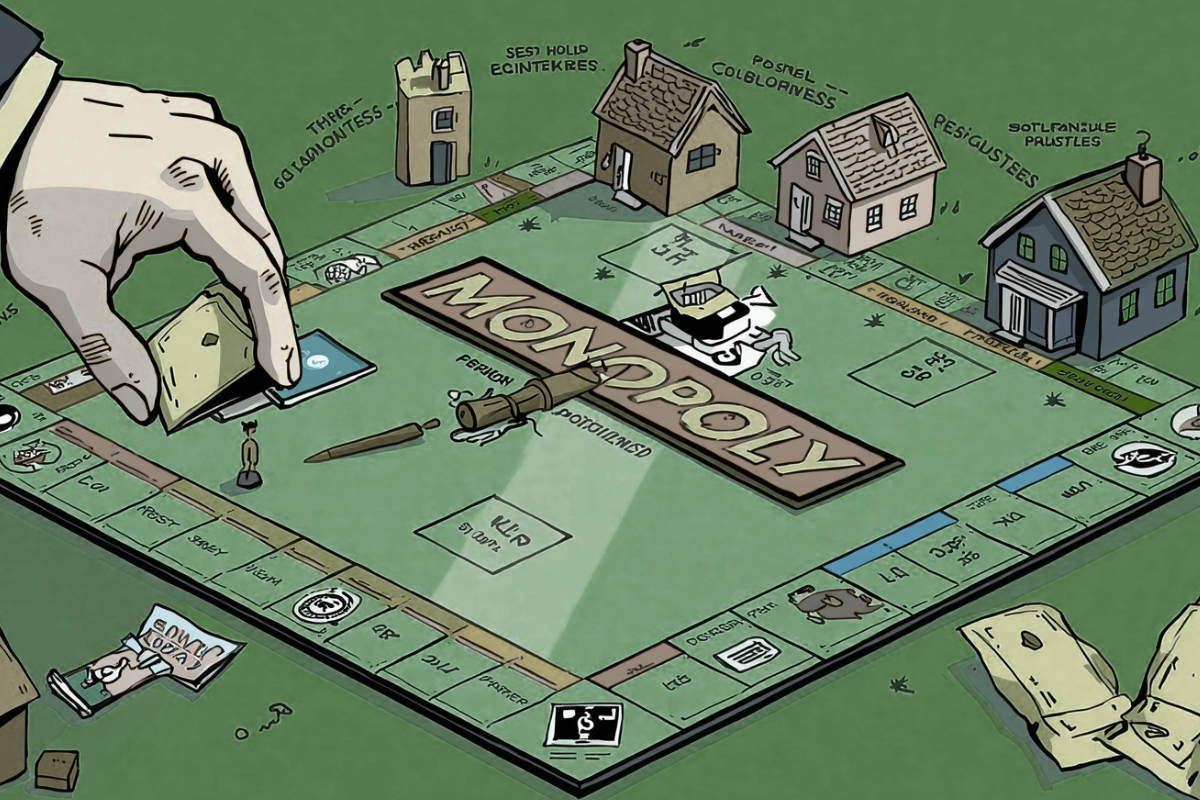

Msquared Capital’s Paul Miron says Australia’s economic prosperity has been built on good luck and not good policy. In an exclusive interview with Livewire’s James Marlay, Paul explores the supply and demand dynamics plaguing property markets and the broader economy. They also talk about the run of redemptions hitting high profile global private credit funds.
Written by James Marlay for Livewire Markets
Front pages today are dominated by headlines about the war in Iran. Hopefully, there’s a resolution soon. The risk is that any escalation adds to the already entrenched challenges facing Australian households and the domestic economy.
Rising inflation and cost-of-living pressures were already biting. Layer in structural issues like housing affordability, and the picture becomes more complicated. Higher input costs are likely to flow through the economy, adding further pressure where it’s already being felt.
In a recent Livewire article, Msquared Capital’s Paul Miron put the spotlight on the structural challenges confronting current and future governments.
Put simply, Miron argues Australia’s economic track record owes more to luck than good policy. Years of strong growth, particularly in property prices, have masked deeper structural weaknesses.
Australia is currently the only G12 economy to have resumed tightening monetary policy amid persistent inflation, a signal that the underlying pressures are deeper than many care to admit – Paul Miron
To an extent, this is familiar territory. Housing affordability is well documented. So too are weak productivity growth and rising levels of debt-funded government spending.
Where it gets more contentious is how to fix it. Miron’s view is that supply and demand need time to rebalance the economy. That means difficult decisions, particularly around migration settings and government spending.
Long-term structural change will come from very brave politicians – Paul Miron
What won’t work, in his view, is trying to stimulate demand in an already constrained housing market through subsidies, or discouraging investment via policies targeting property investors.
Instead, Miron outlines a series of measures aimed at restoring balance between supply and demand, which he believes is the key to easing pressure on property prices.
Given the vibrant discussion that took place in the comments on Paul’s article I reached out to him to discuss his position further. I also took the opportunity to ask him about the implications of the run on redemptions hitting a number of high profile global private credit funds for local investors.
Topics discussed
- 0:00 – Australia’s economic Ponzi Scheme
- 2:35 – Housing affordability – stuck between a rock and a hard place
- 8:55 – Policy solutions require brave politicians
- 10:57 – Why isn’t new housing affordable?
- 13:59 – Implications of the recent redemptions in private credit funds
- 18:46 – Australian private credit is has a point of difference
- 21:32 – ASIC review a net positive for Australian private credit
Disclaimer
Msquared Capital Pty Ltd ACN 622 507 297 AFSL 520293. Information contained in this article is general in nature and has been prepared without taking into account your objectives, financial situation or needs. It does not constitute personal financial product advice, investment advice or a recommendation. Before making any investment decision, you should consider whether the information is appropriate to your circumstances and seek independent financial advice. Property and private credit investments carry risks, including market downturns and borrower defaults, and neither past performance nor security over property guarantees future returns or capital protection.